 Adela
Adela 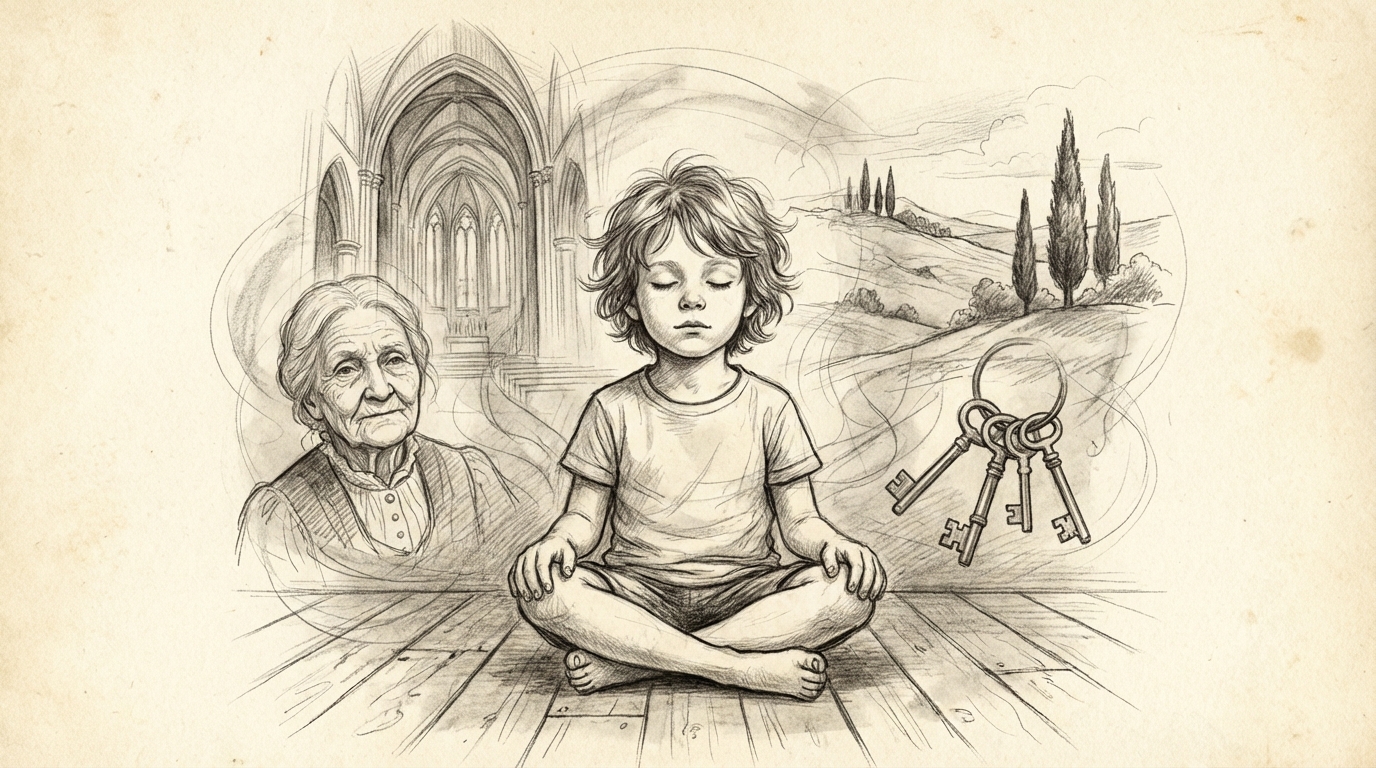
Introduction
What if children could remember lives they lived before? For most of history, such claims were dismissed as fantasy or wishful thinking. But one man dedicated his life to investigating these phenomena with scientific rigor: Dr. Ian Stevenson.
His work represents one of the most systematic attempts to study the possibility of reincarnation using empirical methods. Whether or not you believe in past lives, his research raises profound questions about consciousness, memory, and the nature of human identity.
Who Was Dr. Ian Stevenson?
Ian Stevenson (1918-2007) was a Canadian-American psychiatrist who served as Chair of the Department of Psychiatry at the University of Virginia. Unlike many academics who might dismiss reports of past-life memories, Stevenson approached them as a scientist: with curiosity, methodological rigor, and an open mind.
In 1967, he founded the Division of Perceptual Studies at the University of Virginia, dedicated to investigating phenomena that challenge mainstream scientific paradigms - including near-death experiences, apparitions, and most notably, children who claim to remember previous lives.
His Scientific Methodology
What set Stevenson apart was his commitment to scientific investigation. His methodology included:
Rigorous Documentation
- Interviewed children and families extensively
- Gathered testimony from multiple independent witnesses
- Documented claims before attempting verification
- Recorded physical evidence (birthmarks, birth defects)
- Traveled to locations the children described
- Located families of the "previous personality"
- Cross-referenced children's statements with historical records
- Ruled out normal explanations (fraud, cryptomnesia, fantasy)
- Phobias related to the mode of death (fear of water if drowned, fear of loud noises if shot)
- Skills or knowledge not learned in current life
- Food preferences or aversions matching the previous personality
- Recognition of people from the past life
- Play themes related to the previous person's occupation
- Gender identity issues when remembering a life as the opposite sex
- Attachments to the previous family (sometimes preferring them to their current family)
- He never claimed to have "proven" reincarnation
- Some cases could potentially be explained by fraud, fantasy, or cultural transmission
- Memory is fallible and can be influenced by suggestion
- The strongest cases are rare
- The mystery of consciousness: What is the relationship between mind and brain?
- The nature of memory: Can memories exist outside biological processes?
- Cultural humility: Many cultures have taken reincarnation seriously for millennia
- Scientific openness: Important discoveries often come from investigating anomalies
Verification Process
Global Scope
Stevenson investigated cases across cultures - India, Sri Lanka, Lebanon, Turkey, Thailand, Myanmar, West Africa, Europe, and North America - to understand how cultural beliefs might influence the phenomenon.
Key Findings
Over 40 years, Stevenson documented more than 3,000 cases. His findings revealed consistent patterns:
Age of Memory Onset
Children typically begin speaking about past lives between ages 2-5, before they have been exposed to significant cultural information about reincarnation. The memories usually fade by age 7-8.
Specific, Verifiable Details
Many children provided specific names, places, and events that could be verified. In the strongest cases, children recognized people and places from the "previous life" without prior exposure.
Birthmarks and Birth Defects
Perhaps Stevenson's most striking finding: many children had birthmarks or birth defects that corresponded to wounds on the deceased person they claimed to have been - particularly those who died violently. In some cases, medical records or autopsy reports confirmed the correspondence.
Behavioral Traits
Unusual Behaviors
Children often displayed:
Notable Cases
The Case of Shanti Devi
One of the most famous early cases: a girl in Delhi who, from age 4, spoke of her life as a woman named Lugdi Devi who died in childbirth in a distant town. Investigation confirmed the existence of Lugdi Devi and numerous specific details the child provided.
The Case of James Leininger
An American boy who from age 2 had vivid nightmares about a plane crash. He provided specific details about being a WWII pilot named James Huston who was shot down over Iwo Jima. Research verified a pilot by that name died exactly as the boy described.
The University of Virginia Division of Perceptual Studies
Stevenson's work continues today at the Division of Perceptual Studies (DOPS). Under the leadership of Dr. Jim Tucker, the research has been updated with modern methods while maintaining Stevenson's rigorous standards.
The division has documented over 2,500 cases in their database, with new cases still being investigated. Their work has been published in peer-reviewed journals and continues to challenge our understanding of consciousness.
Criticisms and Limitations
Stevenson was careful to acknowledge the limitations of his research:
His position was that the evidence was suggestive of reincarnation, not conclusive proof - hence his famous book title "Twenty Cases Suggestive of Reincarnation."
What This Means for Us
Regardless of your beliefs about reincarnation, Stevenson's work invites us to consider:
Recommended Resources
To explore Dr. Stevenson's research further, I recommend:
Book: Children Who Remember Previous Lives: A Question of Reincarnation by Ian Stevenson
This accessible book presents the best evidence from Stevenson's decades of research, written for general readers. It includes case studies, methodology explanations, and thoughtful discussion of what the evidence might mean.
Academic Resource: The Division of Perceptual Studies at the University of Virginia continues this research today.
Final Thoughts
Dr. Ian Stevenson dedicated his career to a question most scientists wouldn't touch. His courage to investigate the unexplained with scientific rigor has left us with a body of evidence that deserves serious consideration.
Whether these cases represent actual memories of past lives, some form of psychic connection, or phenomena we don't yet understand, they remind us that consciousness remains one of the greatest mysteries. Stevenson's legacy is not certainty, but wonder - and the scientific humility to follow evidence wherever it leads.
May your journey of understanding continue across all lifetimes.